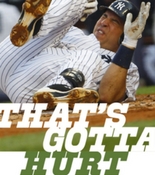
What is a scaphoid fracture, and why can it be such a tough hand and wrist injury? If it doesn’t heal, is surgery an option? I address these concerns in my latest Ask Dr. Geier column.
Dan asks:
I have a scaphoid fracture that I have had treated years ago and it still has not healed properly. I met with another local doctor who suggested two surgeries…first to go in a scope, second to correct the issue three weeks later.
I am against having two procedures done, and would prefer to have everything done at one time. Is this a type of injury you deal with and would you perform a corrective surgery? Or would you refer me to another doctor?
What is a scaphoid fracture?
Unfortunately scaphoid fractures are more common in sports than we would like to see. The scaphoid is one of the main bones in the wrist, located just under the metacarpal at the base of the thumb. There are several ways to fracture the scaphoid, but most commonly athletes suffer this injury with a fall on the outstretched hand. I am not a hand or wrist surgeon, and I usually refer these injuries to my partners who are hand and wrist specialists, but I often examine acute wrist injuries that occur during games that I am covering. Unfortunately, I see these injuries not infrequently when they have been treated or diagnosed as “wrist sprains” and the appropriate imaging was not performed that would have diagnosed a fracture.

Signs and symptoms of a scaphoid fracture
First of all, the location of pain is somewhat characteristic for a scaphoid fracture. Turn your wrist so that the thumb is facing up (toward the ceiling). Now you’re your thumb back toward your elbow, pulling it away from the other four fingers. You will see tendons at the base of the thumb surrounding a hollow area. This hollow area is called the “anatomic snuffbox.” A person with a wrist injury that has pain when he or she presses in this anatomic snuffbox should be concerned that the injury is really a scaphoid fracture. Whenever I find tenderness to palpation in this area specifically, I always obtain x-rays of the patient’s wrist.
Surgery for a scaphoid fracture
If the patient’s history and physical examination and subsequent wrist x-rays show a scaphoid fracture, I think that aggressive treatment is indicated right away. Now I’m not saying that every scaphoid fracture needs surgery. If the fracture is non-displaced, it can often be treated in a cast. Whether or not this is a short-arm cast or long-arm cast is subject to debate among hand surgeons, so I would defer to their recommendations. If the fracture is displaced (meaning that it does not line up perfectly), surgery is usually indicated. Surgery usually consists of a small incision to line the fracture optimally and hold it in place with a screw down the length of the bone.

The risk of a scaphoid fracture that didn’t heal
The main concern with missing a scaphoid fracture or nonoperative treatment of a displaced fracture is that the fracture might not heal (a nonunion). The blood supply to the scaphoid is tenuous, making the risk of nonunion significant. A loss of blood supply can cause what we call avascular necrosis of the scaphoid. Therefore if surgical treatment is indicated, I feel that a hand surgeon should perform it fairly quickly. If a nonunion occurs, there are surgical options. While again I would defer to the hand surgeons, I will say that the surgery usually involves some sort of bone grafting procedure with internal fixation with a screw. Whether or not this can be done arthroscopically or in one surgery versus two surgeries, I will leave that up to hand surgeons to provide more specific recommendations. The main point I want to emphasize is that athletes should have these certain wrist injuries evaluated quickly and treated appropriately.
Also read:
What’s the risk of a scaphoid fracture that didn’t heal?
Scaphoid fracture
Recommended Products and Resources
Click here to go to Dr. David Geier’s Amazon Influencer store!
Due to a large number of questions I have received over the years asking about products for health, injuries, performance, and other areas of sports, exercise, work and life, I have created an Amazon Influencer page. While this information and these products are not intended to treat any specific injury or illness you have, they are products I use personally, have used or have tried, or I have recommended to others. THE SITE MAY OFFER HEALTH, FITNESS, NUTRITIONAL AND OTHER SUCH INFORMATION, BUT SUCH INFORMATION IS DESIGNED FOR EDUCATIONAL AND INFORMATIONAL PURPOSES ONLY. THE CONTENT DOES NOT AND IS NOT INTENDED TO CONVEY MEDICAL ADVICE AND DOES NOT CONSTITUTE THE PRACTICE OF MEDICINE. YOU SHOULD NOT RELY ON THIS INFORMATION AS A SUBSTITUTE FOR, NOR DOES IT REPLACE, PROFESSIONAL MEDICAL ADVICE, DIAGNOSIS, OR TREATMENT. THE SITE IS NOT RESPONSIBLE FOR ANY ACTIONS OR INACTION ON A USER’S PART BASED ON THE INFORMATION THAT IS PRESENTED ON THE SITE. Please note that as an Amazon Associate I earn from qualifying purchases.
Podcast: Play in new window | Download